What Are Cappadocia's Fairy Chimneys?
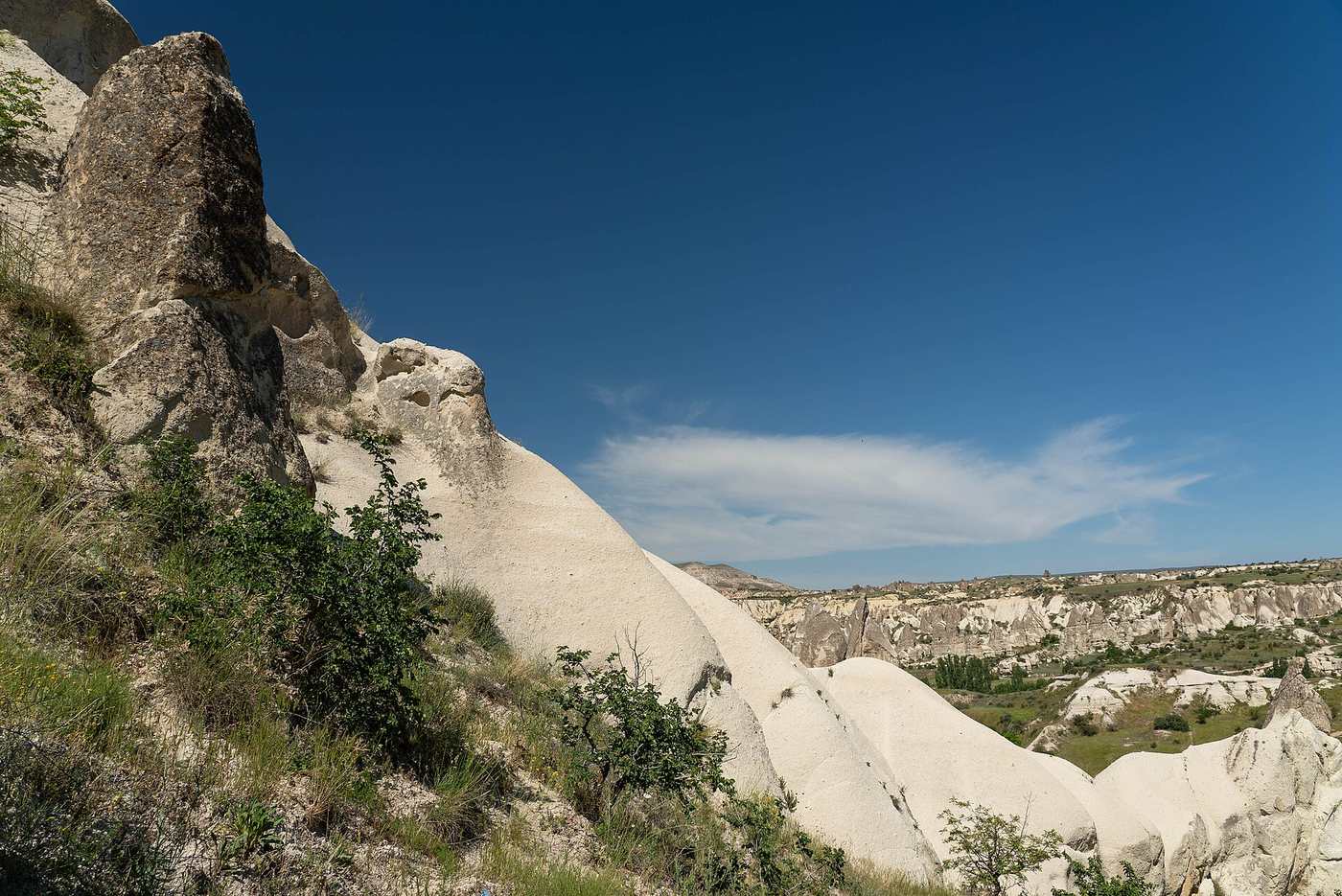
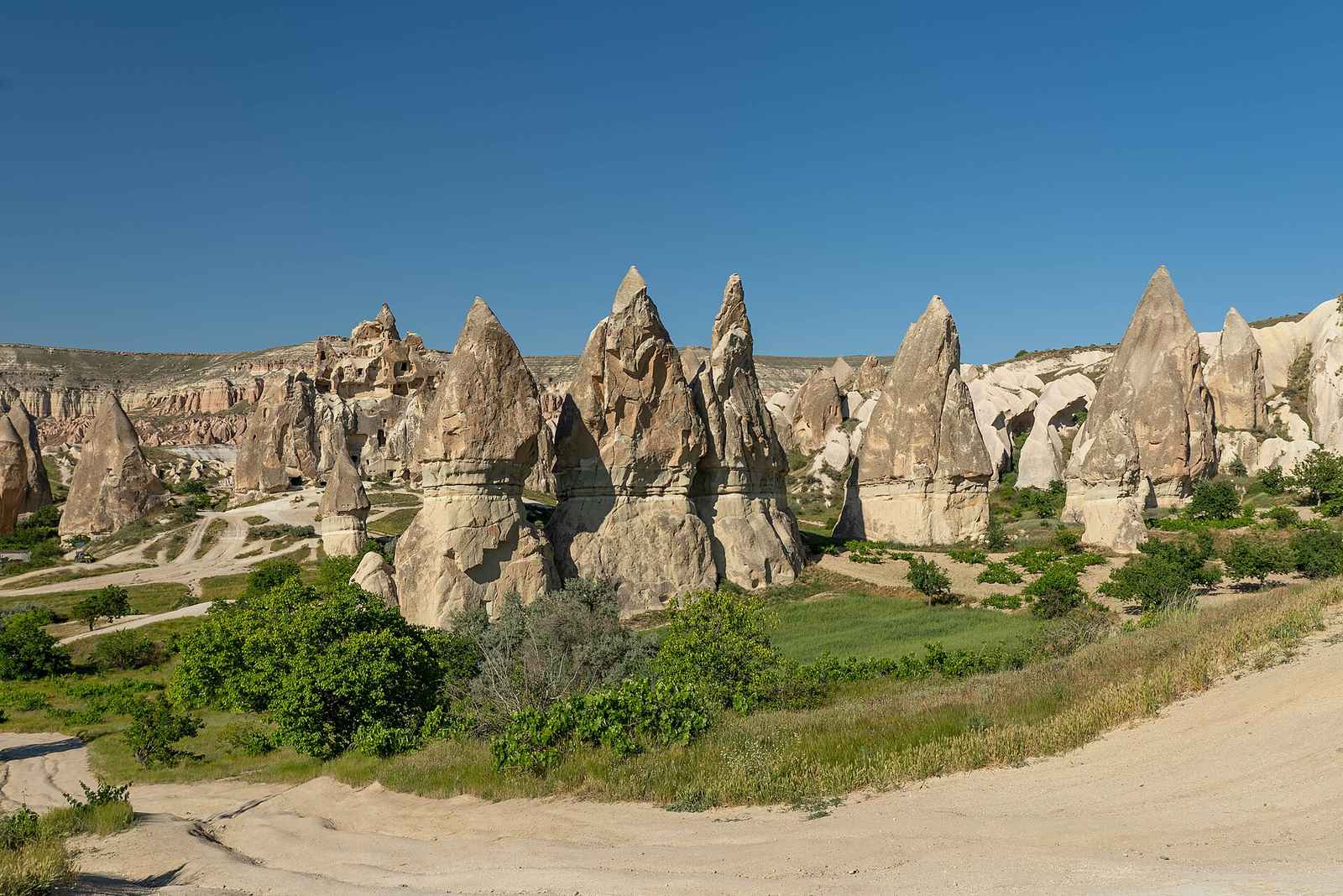
The fairy chimneys of Cappadocia — known in Turkish as peri bacaları — are the region's defining natural feature: tall, tapering columns of soft volcanic rock, some standing over 30 meters high, scattered across the valleys around Göreme, Ürgüp, and Avanos. They formed over several million years as eruptions from Mount Erciyes and Mount Hasan blanketed Central Anatolia in layers of volcanic ash, which compressed into a soft rock called tuff. Wind, rain, and seasonal flash floods then eroded the surrounding tuff away, leaving behind harder, more resistant columns wherever a boulder of denser rock — usually basalt or ignimbrite — protected the softer material directly beneath it, like an umbrella.
This is why the most photogenic fairy chimneys have a distinctive mushroom-like silhouette: a slender tuff shaft rising to a wider, darker cap of harder stone. Where that cap has eroded away or was never present, the chimney gradually rounds off into a cone and, eventually, collapses — a process still visible in the landscape today.
How They Formed: The Short Version
| Stage | What happened |
|---|---|
| Volcanic deposition | Eruptions from Erciyes and Hasan volcanoes covered the region in thick layers of ash, which hardened into soft tuff |
| Caprock protection | Scattered boulders of harder basalt/ignimbrite settled on top of the tuff layer |
| Differential erosion | Rain and wind eroded the exposed tuff faster than the areas shielded beneath the harder caprock |
| Column formation | Tall pillars emerged, each protected at the top by its remaining caprock "hat" |
| Ongoing change | Chimneys without a cap erode into cones; some eventually collapse, while new ones continue to form elsewhere |
This same soft tuff that erosion shaped into chimneys is what made Cappadocia's rock-cut architecture possible — the region's cave churches, dovecotes, and cave hotels are all carved into the same easily worked stone. Read more in our guide to Cappadocia's cave hotels.
Best Places to See Fairy Chimneys
Paşabağ (Monks Valley)
Just north of Göreme on the road to Zelve, Paşabağ is famous for multi-headed fairy chimneys — tall columns that split into two or three separate caps near the top. Early Christian hermits carved small chapels and cells into several of the chimneys here; a few can still be entered via short internal staircases.
Devrent Valley (Imagination Valley)
Devrent is a rocky, largely bare valley where wind-eroded formations are said to resemble animals and familiar shapes — a camel, a seal, even a rendering of the Virgin Mary is pointed out by local guides. Unlike Paşabağ, Devrent has no vegetation, which makes the chimney silhouettes stand out sharply against the sky, especially at sunset.
Zelve Open-Air Museum
Zelve was an inhabited cave village until the 1950s, when erosion made the dwellings unsafe and residents were relocated to nearby Yeni Zelve (New Zelve). Visitors can walk through three connected valleys of abandoned cave homes, churches, and a mosque, all carved directly into fairy chimney formations.
Love Valley
Named for its unusually tall, slender chimney formations, Love Valley near Göreme is one of the most-photographed viewpoints in Cappadocia and a popular short hike. See our dedicated valleys guide for trail details.
Visiting Tips
- Best light: early morning and late afternoon give the tuff its warmest golden tones and cast long shadows that emphasize the chimney shapes.
- Combine with a balloon flight: the classic aerial view of fairy chimneys is from a hot-air balloon at sunrise, when hundreds of chimneys are visible across multiple valleys at once.
- Wear sturdy shoes: paths at Paşabağ and Zelve involve uneven volcanic rock and occasional short climbs.
- Respect the site: fairy chimneys are a protected geological and archaeological landscape within Göreme National Park; climbing on fragile or capped formations is discouraged and can be dangerous.
- Pair with hiking: many of the best fairy chimney views are reached on foot through Cappadocia's valley trails — see our hiking guide for routes and difficulty levels.
Photographing the Chimneys
Photographers typically plan around two windows: dawn, when balloons rise over the valleys and soft light rakes across the tuff, and the hour before sunset, when the same rock glows orange-pink. Devrent and Paşabağ are both easily reached by car or organized tour and can be combined with Zelve and the nearby Avanos pottery villages in half a day. For more inspiration, browse our Cappadocia photo gallery, or check the FAQ for other common visitor questions.
How Fairy Chimneys Are Used Today
Beyond their role as a scenic backdrop, many fairy chimneys throughout Cappadocia continue to serve practical purposes much as they have for centuries. Some smaller chimneys near Avanos and Ürgüp are still used as cool, naturally insulated storage for wine, potatoes, and other produce, taking advantage of the stable underground-like temperature inside the rock even in the height of summer. Others have been converted into small shops, cafes, or even boutique guesthouse rooms, blending the region's geological history directly into everyday commercial life rather than treating the formations purely as a historical curiosity.
Conservation and Ongoing Erosion
Because fairy chimneys are an active, ongoing geological process rather than a fixed monument, the landscape visitors see today is not the same as it was a generation ago, and it will continue to change after they leave. Erosion is constant, if slow, and site authorities within Göreme National Park monitor at-risk formations, particularly those near footpaths or with visible structural cracking. Occasionally a chimney loses its caprock and topples, a natural part of the same process that created it in the first place. Visitors are asked to stay on marked paths and avoid climbing on or against chimney bases, both for personal safety and to avoid accelerating erosion on formations that took millennia to form.
Fairy Chimneys Beyond the Main Valleys
While Paşabağ, Devrent, Zelve, and Love Valley are the most visited fairy-chimney sites, smaller and less crowded formations can be found scattered throughout the wider region, including around Ürgüp, Ortahisar, and the road between Avanos and Göreme. Travelers with extra time, or those hoping to avoid tour-bus crowds at the main sites, often find equally striking formations at these quieter spots, sometimes with the added bonus of a nearby cave-carved cafe or family-run pottery workshop.