Lake Salda: Turkey's Turquoise "Maldives" Lake
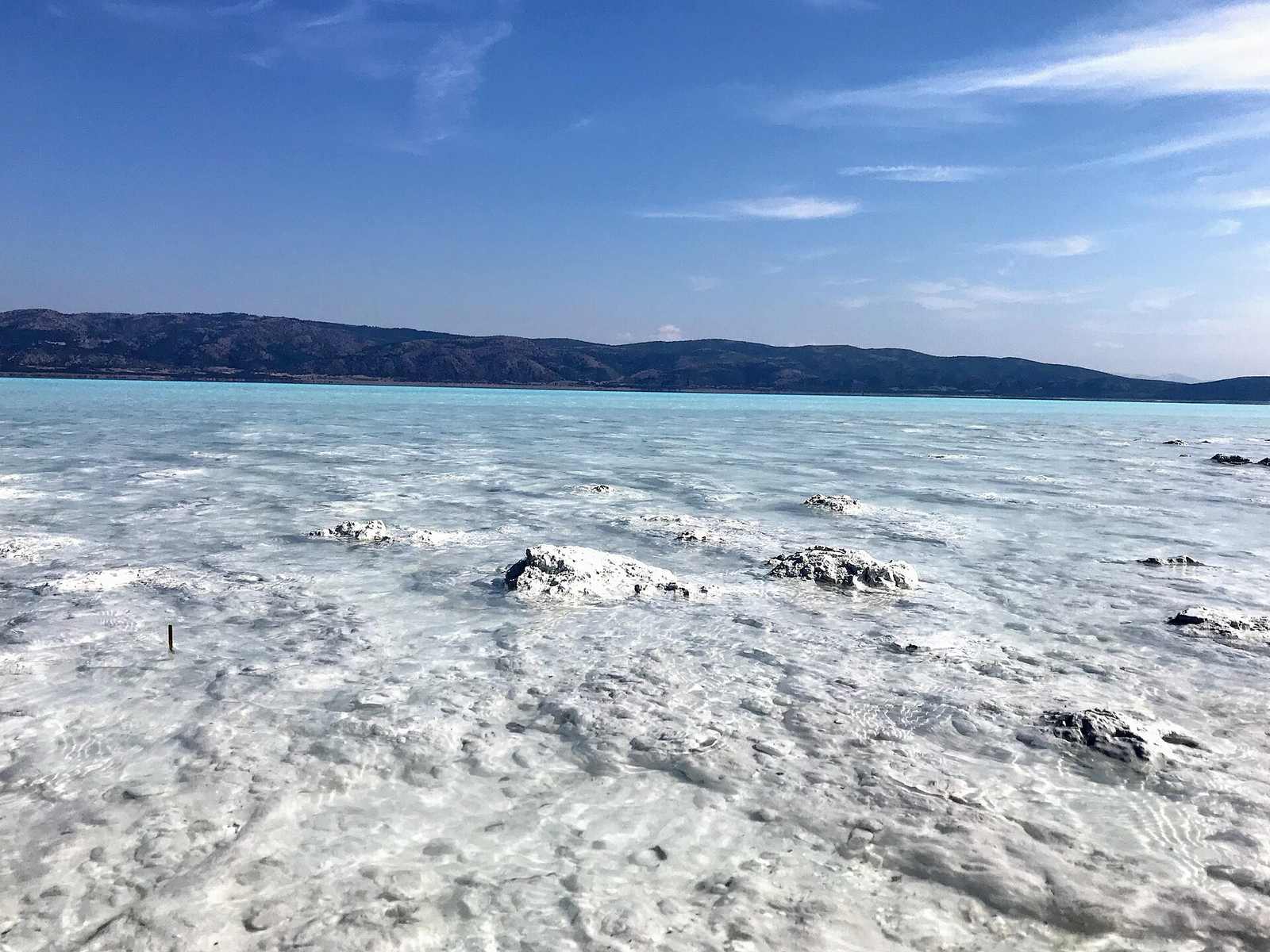
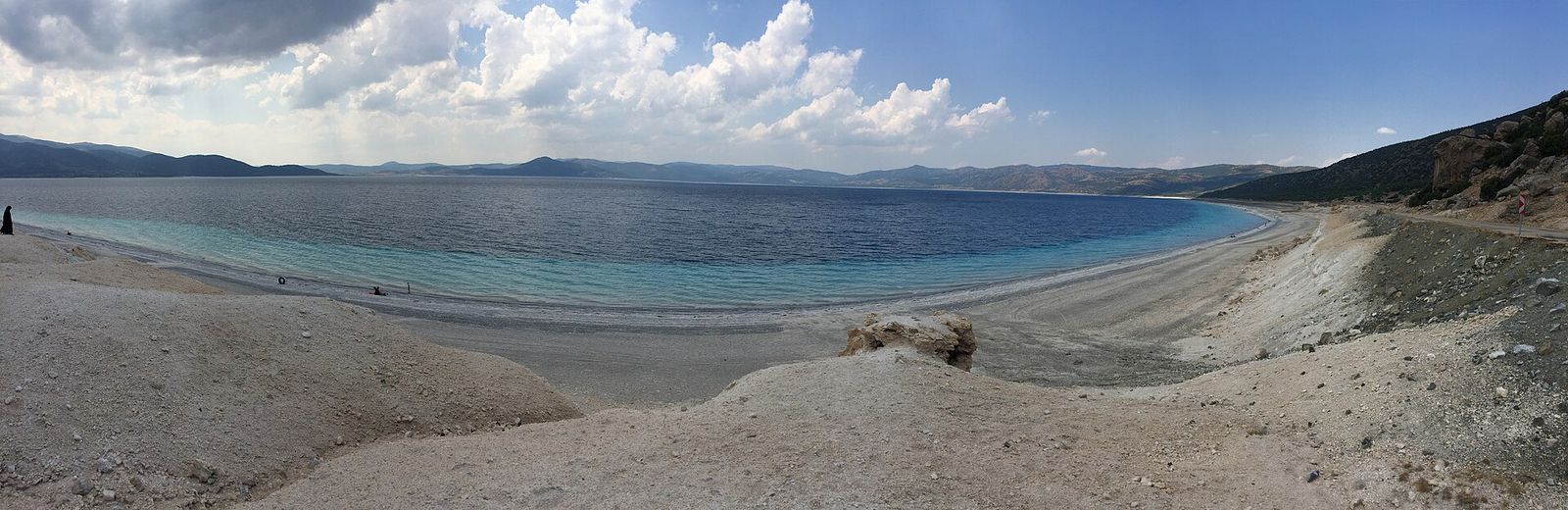
Lake Salda (Turkish: Salda Gölü) is one of Turkey's most striking natural landmarks — a deep tectonic lake in Burdur province, in the Yeşilova district of the Mediterranean region (coordinates 37.5500° N, 29.6833° E). Ringed by pine-covered hills and fed largely by underground springs, the lake is famous for two things that rarely appear together: water in shades of turquoise and cobalt that rival any tropical coastline, and shorelines of brilliant white sediment that visitors instinctively compare to sand — earning Salda its popular nickname, "Turkey's Maldives."
Unlike a typical Turkish lake, Salda is also a lake of genuine scientific importance. Its beaches are not sand at all but hydromagnesite, a magnesium-carbonate mineral that forms in only a handful of places on Earth. That rare chemistry is why NASA researchers have studied Lake Salda as the closest known terrestrial analog to Mars' Jezero Crater, the ancient lakebed where the Perseverance rover has been searching for signs of past microbial life since 2021. Few lakes anywhere combine such photogenic beauty with actual space-science relevance.
Quick Facts
| Location | Burdur province, Yeşilova district, Mediterranean Turkey (37.5500° N, 29.6833° E) |
| Depth | ~185 meters — one of Turkey's deepest lakes |
| Known for | Turquoise water and white hydromagnesite beaches, nicknamed "Turkey's Maldives" |
| Scientific note | Studied by NASA as a Mars/Jezero Crater analog site |
| Cost | Free entry; minor parking fee at main beach areas |
| Best time to visit | June–September for swimming and color; spring/autumn for quiet scenery |
| Nearest airports | Denizli (DNZ) and Isparta Süleyman Demirel (ISE), both roughly 1.5 hours by road |
Why Lake Salda Looks Like Nowhere Else in Turkey
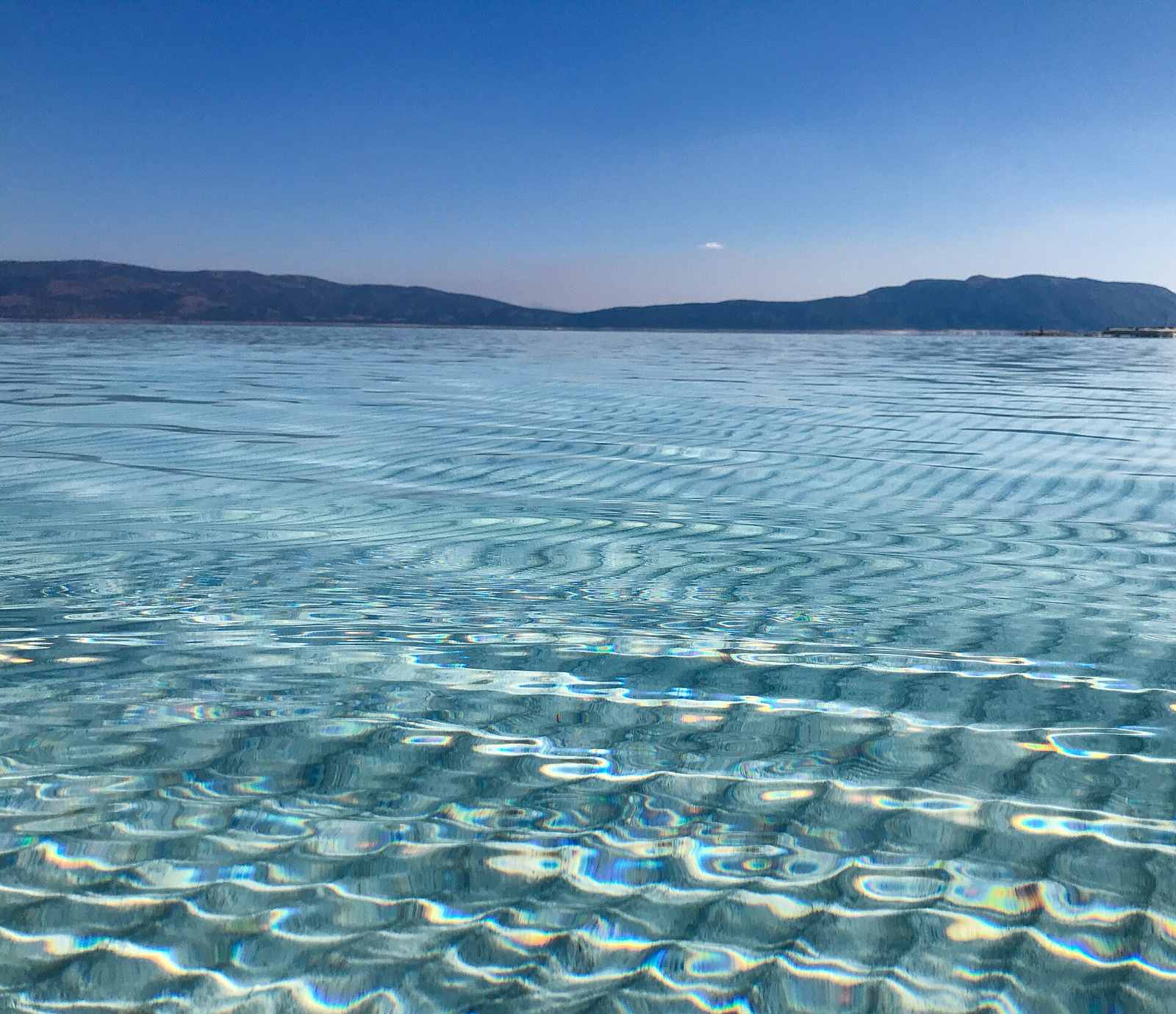
The lake's surreal color palette comes from its geology. Salda occupies a tectonic depression and reaches depths of about 185 meters, so the water column absorbs and scatters light in a way that produces deep blue tones offshore while shallow sections over the pale mineral bed glow turquoise and aquamarine. The shoreline "beaches," meanwhile, are built from hydromagnesite deposited by mineral-rich spring water — a bright white crust that feels closer to chalk or fine gypsum than ordinary sand.
Because this combination is so rare, the fragile white shoreline is now legally protected. To prevent erosion and contamination of the mineral beds, swimming is restricted to designated zones, and the sensitive "Beyaz Adalar" (White Islands) sector of the shore is fenced off from foot traffic entirely. Visitors are asked to stay on marked paths and swim only where lifeguards or signage indicate it is permitted — both for the lake's protection and for safety, since the lake bed drops off quickly in places.
A Lake With a Mars Connection
Lake Salda's scientific fame is not marketing hype. Geologists identified its hydromagnesite and clay-rich shoreline deposits as a strong match for the mineralogy detected by orbital instruments inside Jezero Crater, the delta-shaped basin on Mars that NASA's Perseverance rover has been exploring since it landed there in February 2021. Because ancient lakebeds are considered prime locations to search for preserved biosignatures, researchers have used Salda as a field laboratory to understand how similar minerals might have formed — and might have preserved evidence of life — on early Mars. That single fact turns an already beautiful lake into one of the more scientifically interesting bodies of water in the country.
Planning Your Visit
A day trip to Lake Salda typically combines a swim or beach walk with a scenic drive through the Burdur countryside. Most travelers base themselves in Denizli, Isparta, or Burdur city and treat the lake as a half-day to full-day excursion, often pairing it with a stop at Pamukkale since both sites sit within the same broader region of southwestern Turkey.
Before you go, check these dedicated guides:
- White beaches — where to find the best hydromagnesite shoreline and the protected swimming zones.
- How to get there — flights, driving routes, and transfer options.
- Best time to visit — seasonal weather, water temperature, and crowd levels.
- What to do — swimming, photography, walking trails, and nearby villages.
- Camping — designated camping areas around the lake.
- Map — orientation and coordinates for the main beach access points.
If you would rather not self-drive or plan logistics from scratch, a Lake Salda day tour can bundle transport, a local guide, and stops at nearby viewpoints into a single booking — a convenient option for travelers coming from Denizli, Antalya, or Fethiye. Travelers staying overnight in the area can also browse hotels near Lake Salda for options ranging from Yeşilova guesthouses to Burdur city hotels.
A Note on Respecting the Site
Lake Salda's popularity has grown quickly since photos of its "Maldives-like" beaches spread online, and that popularity puts real pressure on a fragile ecosystem. Removing mineral sediment, driving off designated tracks, or swimming outside marked zones can damage the very features that make the lake special — and some of these actions are now prohibited by park authorities. Visiting responsibly, packing out all trash, and sticking to approved swimming and parking areas helps ensure Lake Salda stays this striking for the next visitor, and for the scientists who continue to study it.
For quick answers to common questions, see our Lake Salda FAQ, or browse the full photo gallery for more views of the lake's turquoise water and white shoreline.