Pamukkale: Turkey's Cotton Castle
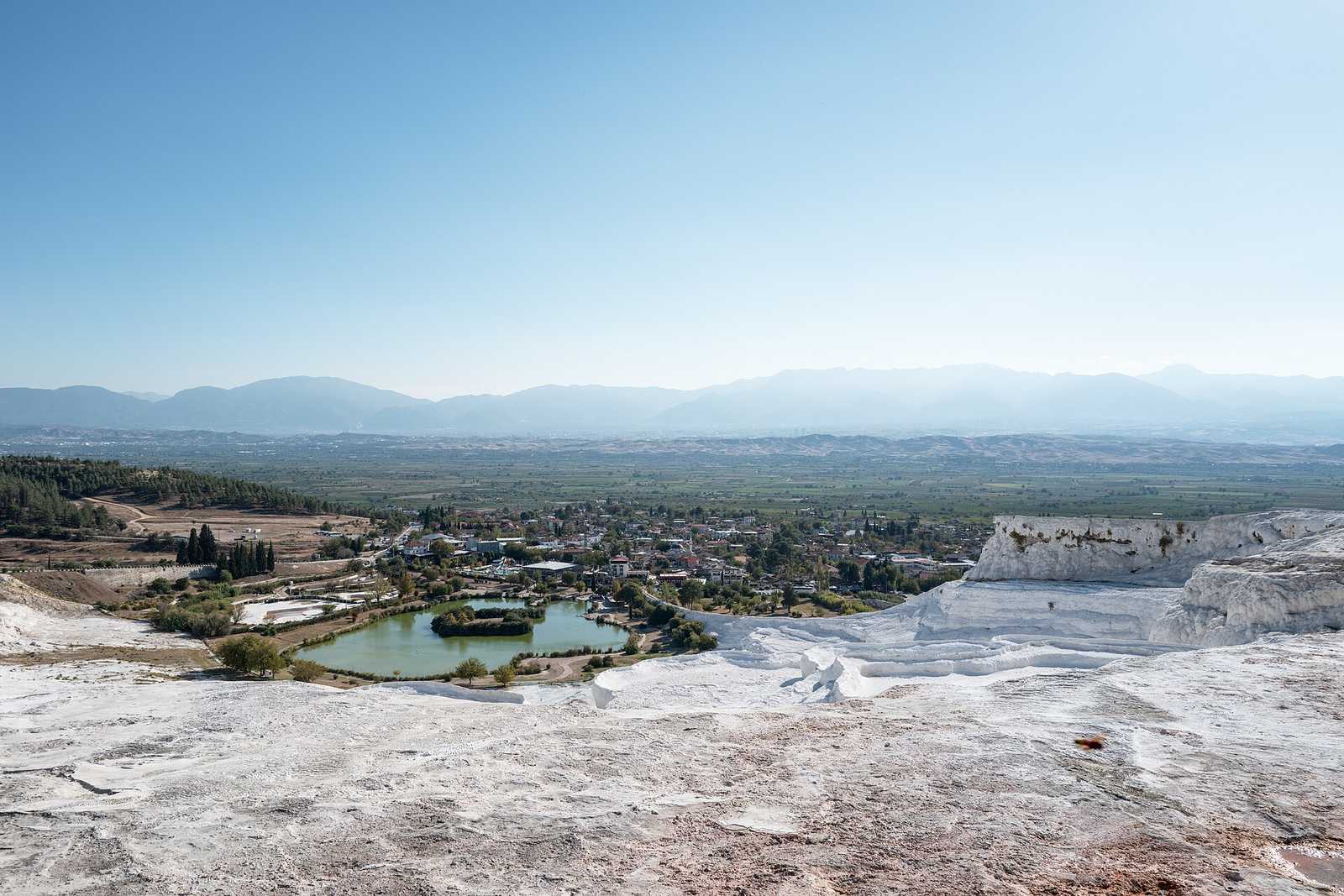
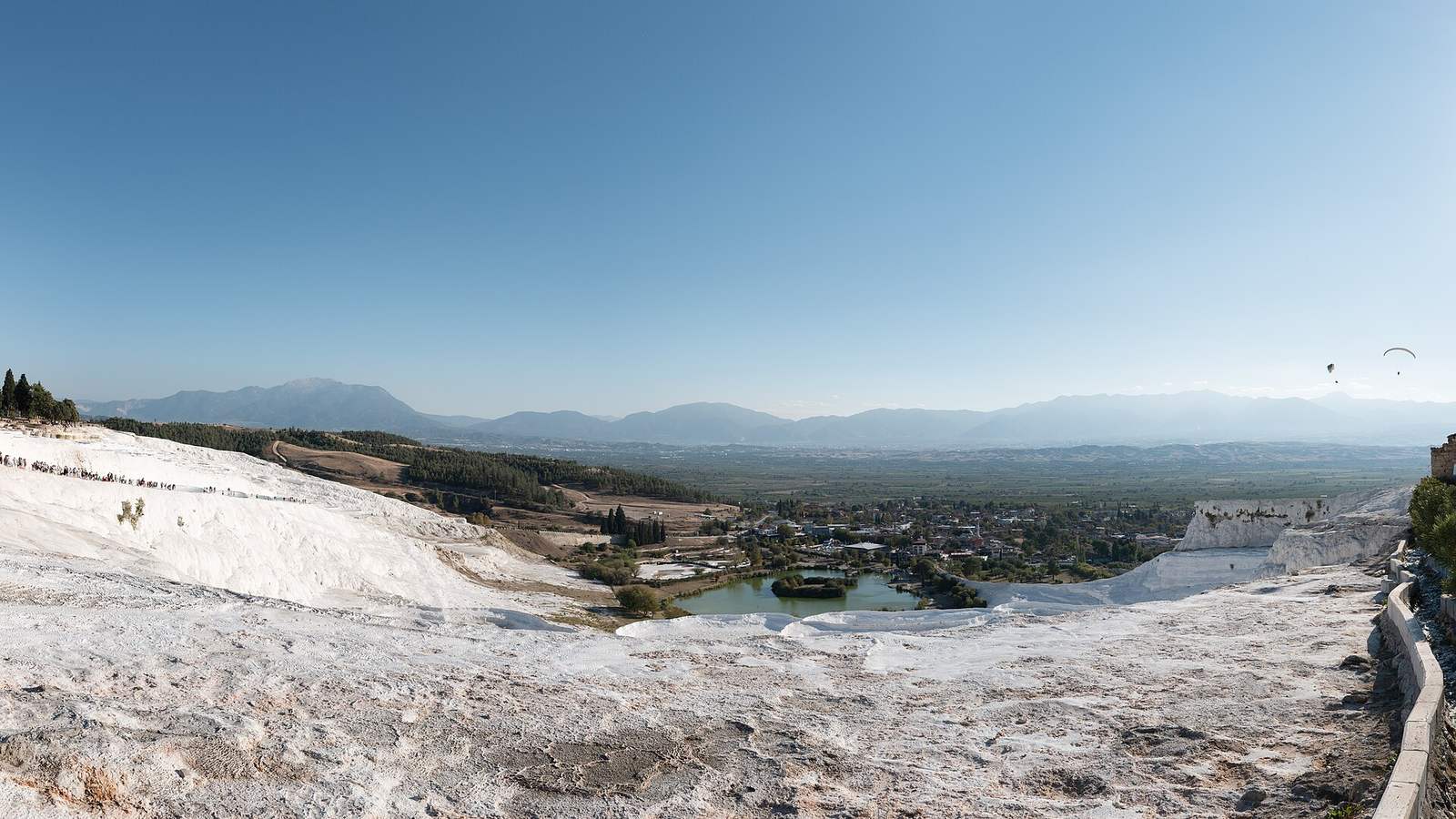
Pamukkale — meaning "cotton castle" in Turkish — is one of Turkey's most photographed natural landmarks. Located in Denizli province in Aegean Turkey (coordinates 37.9203, 29.1206), it is famous for cascading white travertine terraces that appear to spill down a hillside like frozen snow. The terraces were formed over thousands of years as mineral-rich thermal spring water flowed downhill, depositing calcium carbonate that hardened into the brilliant white travertine seen today.
Perched directly above the terraces is Hierapolis, a Greco-Roman spa city that thrived because of these same thermal waters. Together, Pamukkale's travertines and the ruins of Hierapolis were inscribed as a joint UNESCO World Heritage Site in 1988 — recognition of both the site's natural beauty and its 2,000-plus years of human history.
Quick Facts
| Location | Denizli province, Aegean Turkey (37.9203° N, 29.1206° E) |
| Formed by | Calcium carbonate deposits from mineral-rich thermal spring water |
| UNESCO status | World Heritage Site (with Hierapolis) since 1988 |
| Ticket (2026) | €30 for foreign visitors, covers travertines + Hierapolis; verify at muze.gov.tr |
| Hours | Roughly 08:00–21:00 (pedestrian gate ~08:00–18:00); seasonal "night museum" ~19:00–23:00 |
| Best time to visit | April–June and September–October |
Why Pamukkale Is Different From Anywhere Else
Few destinations combine geology, ancient history, and a spa experience the way Pamukkale does. The site rewards visitors on three distinct levels:
- The travertine terraces — a natural formation you walk across barefoot, with warm water pooling around your feet.
- Hierapolis Ancient City — a remarkably intact Roman theatre, a vast necropolis, temple ruins, and the mysterious Plutonium, a gate the Romans believed led to the underworld.
- The Antique Pool (Cleopatra's Pool) — a chance to swim in 36°C thermal water among submerged fluted marble columns from a collapsed Roman colonnade.
Because the terraces sit at the edge of a plateau overlooking the Denizli plain, the views alone — especially at sunset, when the white travertine turns gold — are worth the trip.
Conservation: Why You Walk Barefoot
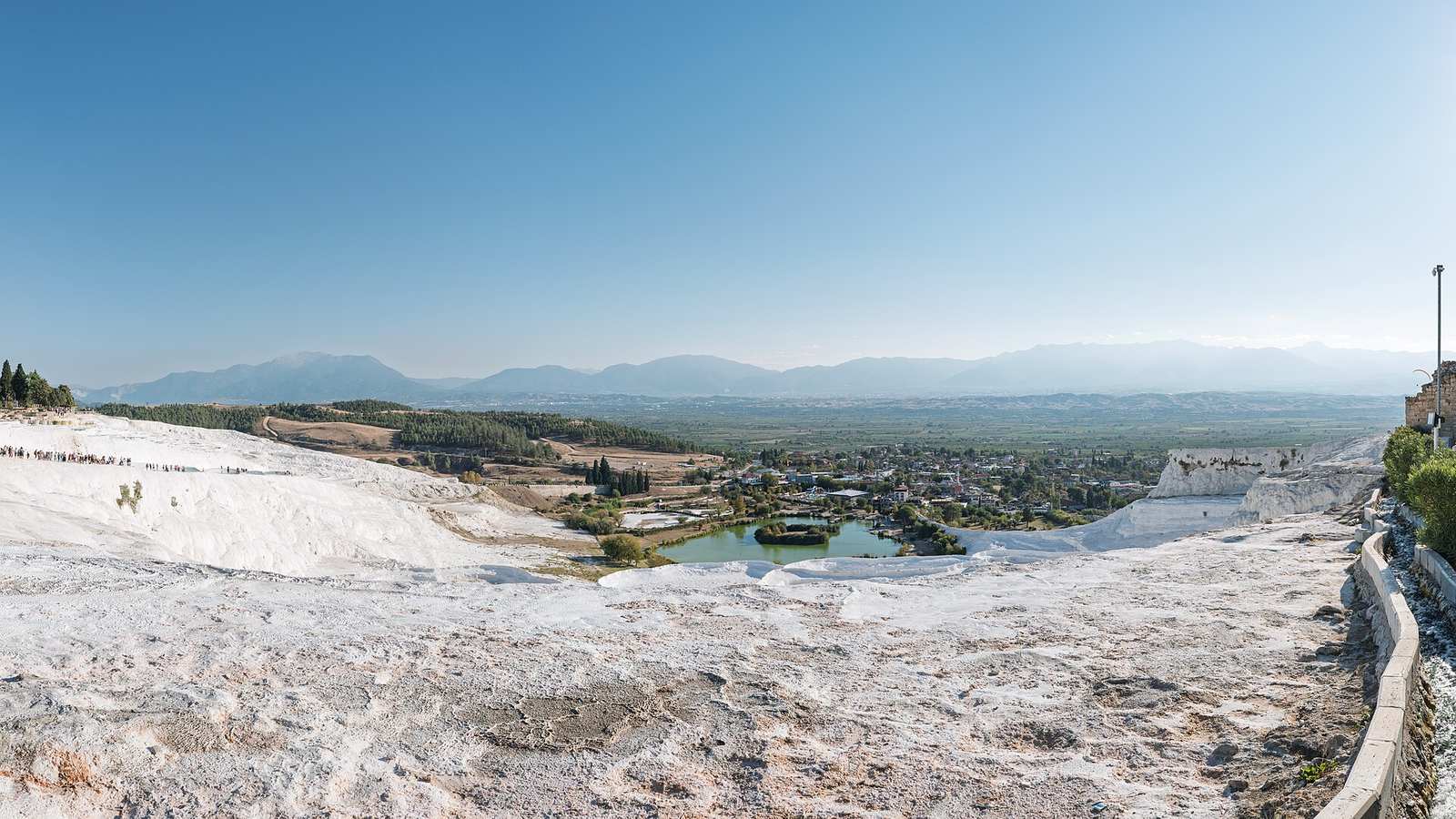
Pamukkale's terraces are a living geological feature, not a static monument, and they are fragile. Visitors are required to remove their shoes before walking on the travertine to protect the surface from erosion and staining. Water flow across different sections of the terraces is also rotated and managed by site authorities so that no single area is overexposed, allowing the white mineral crust to keep re-forming naturally. Please stay on the marked paths — climbing on dry, inactive terrace sections or removing mineral deposits is prohibited and damages a feature that took millennia to build.
What a Typical Visit Looks Like
Most visitors enter either from the south gate (near the ancient city and Antique Pool) or the north gate (near the Hierapolis Archaeology Museum and necropolis), then walk down through the terraces on the connecting path. A full visit — terraces, Hierapolis ruins, and a stop at the Antique Pool — comfortably fills three to five hours. Many travelers pair Pamukkale with an overnight stay in Denizli or Pamukkale village, or join it as a long day trip from İzmir, Antalya, or Fethiye.
For a deeper look at the individual pieces of the site, see our dedicated pages on the travertines, the Antique Pool, and Hierapolis Ancient City.
Planning Your Visit
Before you go, it's worth checking the practical details:
- Tickets and entrance fees — current pricing, what's included, and free-entry rules.
- How to get to Pamukkale — flights, buses, and the drive from Denizli.
- Best time to visit — seasonal weather and crowd patterns.
- Map and location — exact coordinates and orientation around the site.
If you'd rather not plan the logistics yourself, you can book a Pamukkale tour that bundles transport, a guide, and entrance in one package — a popular option for travelers coming from İzmir, Antalya, or Fethiye on a tight schedule.
Hierapolis: The City Above the Terraces
Hierapolis was founded in the 2nd century BC and grew into a significant Roman spa town, drawing visitors who believed the thermal waters had healing properties — much as travelers do today. Its surviving structures include a large Roman theatre with well-preserved seating, one of the largest necropolises in Asia Minor with hundreds of tombs and sarcophagi, the Temple of Apollo, and the Plutonium, a cave opening once associated with toxic gases and underworld mythology. The site's archaeology museum, housed in a restored Roman bath complex, displays statues, sarcophagi, and artifacts recovered from the excavations. Read the full Hierapolis guide for more detail.
Photos and Further Reading
Browse our Pamukkale photo gallery for more images of the terraces, the Antique Pool, and Hierapolis, or check the FAQ for quick answers to the most common visitor questions.