A trail built on highlights
Few long-distance trails pack in as many distinct highlights per kilometer as the Lycian Way — turquoise coves, hidden valleys, Lycian rock tombs, and a hillside of eternal flames all sit within a few days' walk of each other. Here are the landmarks that define the trail, roughly west to east.
Ölüdeniz and the Blue Lagoon
The trail's western trailhead sits just above Ölüdeniz, famous for its enclosed turquoise lagoon and the paragliding launches on the cliffs above. While the beach itself is a short detour from the marked trail, most hikers start or end their trip with at least a half-day here — swimming in the lagoon or watching paragliders drift down from Babadağ mountain.
Butterfly Valley
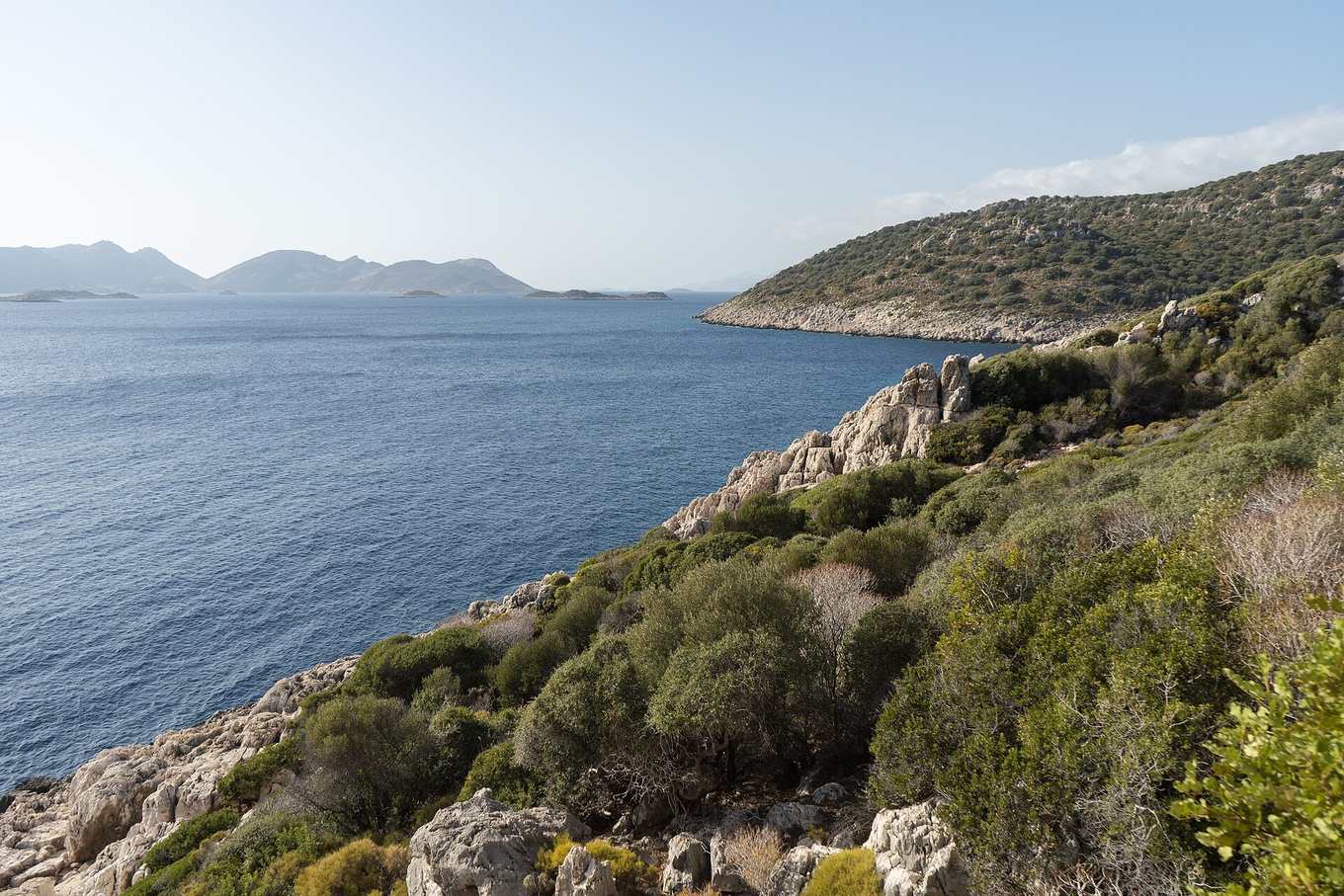
Between Ölüdeniz/Faralya and Kabak, the trail runs along cliffs directly above Butterfly Valley, a steep-sided canyon reachable by a demanding side path (or boat from Ölüdeniz) that opens onto a secluded beach. The valley is named for the tiger moths and butterflies that gather here in warmer months, drawn to the sheltered microclimate. It's one of the most photographed detours on the entire trail — see our route and stages guide for exactly where the side trail branches off.
Kabak
A short walk past Butterfly Valley, Kabak is a boulder-strewn bay backed by terraced eco-camps and simple guesthouses built into the hillside. It's a popular overnight stop and a natural pause point for hikers doing just the western section of the trail.
Patara Beach and ancient Patara
Further along, the trail reaches Patara, home to one of Turkey's longest uninterrupted sand beaches (around 18km) and the extensive ruins of ancient Patara — a Lycian League capital with a well-preserved theatre, city gate, and lighthouse ruins among the dunes.
Myra and the rock tombs of Demre
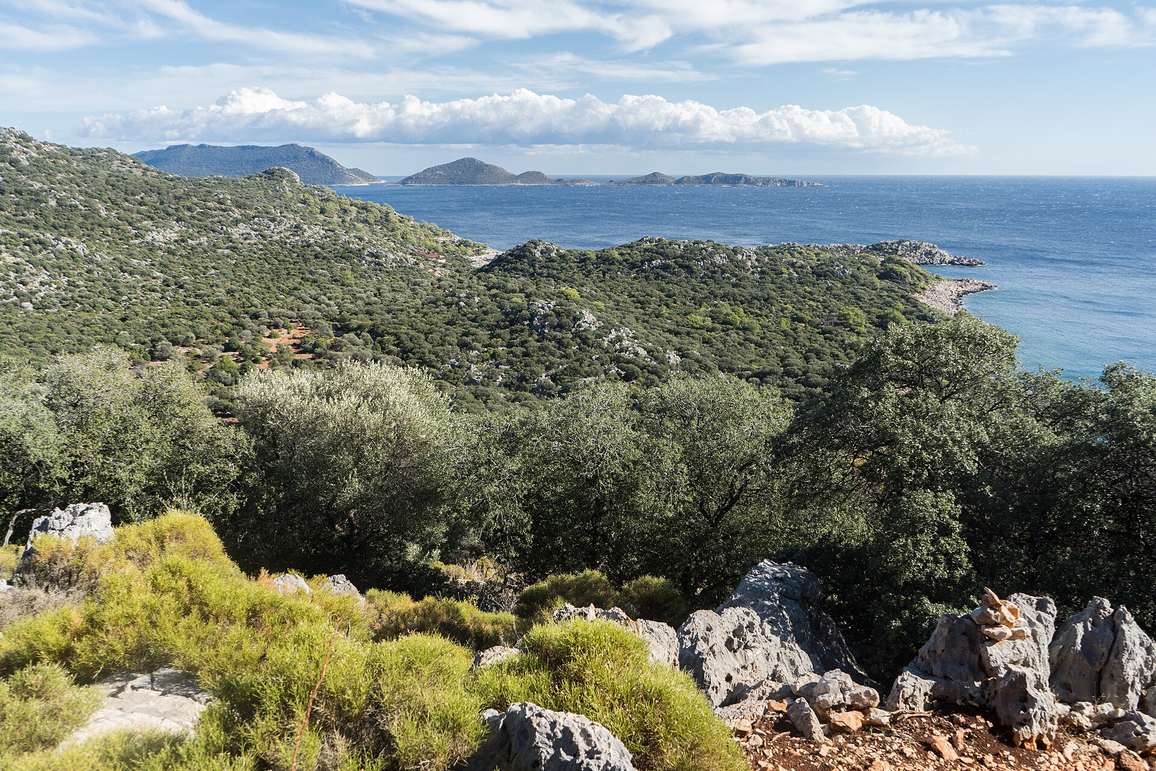
Near Demre, the trail passes close to ancient Myra, famous for its dramatic Lycian rock-cut tombs carved into a cliff face and a well-preserved Roman theatre, as well as the Byzantine church associated with St. Nicholas, the historical figure behind the Santa Claus legend.
Olympos
Toward the eastern end, the trail runs directly through Olympos, an atmospheric ancient city half-swallowed by forest, with ruined temples, a necropolis, and a river running out to a long pebble beach. Olympos's relaxed tree-house guesthouse scene makes it one of the trail's most popular overnight stops.
The Chimaera (Yanartaş)
A short walk above the village of Çıralı near Olympos, the Chimaera (Yanartaş, "burning rock") is a hillside where natural gas seeping through cracks in the rock has burned in dozens of small flames for centuries — documented since antiquity and linked in Greek mythology to the fire-breathing Chimaera monster. Visiting after dark, when the flames glow against the night sky, is the classic way to experience it.
Mount Olympos (Tahtalı) and Cape Gelidonya
The trail's eastern stages climb the forested foothills of Tahtalı (ancient Mount Olympos), Turkey's tallest coastal peak, with sweeping Mediterranean views, before the route eventually reaches the lighthouse at Cape Gelidonya, a wilder, less-visited landmark near the trail's remote southeastern stretch.
Lesser-known highlights worth seeking out
Beyond the famous names, a handful of quieter landmarks reward hikers willing to detour slightly. Sidyma, a small Lycian ruin set among olive groves between Kabak and Patara, sees a fraction of the visitors that Patara or Xanthos receive, despite well-preserved tombs and a temple platform. Cape Gelidonya, near the trail's remote southeastern stretch past Finike, offers a lighthouse and sweeping open-water views that feel far removed from the busier western sections. And the mountain village of Alinca, perched high above Kabak, gives some of the best panoramic views on the entire western trail, looking straight down over Butterfly Valley to the sea.
Combining highlights into a single trip
Because the trail's landmarks are spread across five distinct regions, the most efficient way to see several in one trip is to pick a contiguous stretch rather than jumping between distant sections. A Fethiye-to-Patara week, for instance, combines Ölüdeniz, Butterfly Valley, Kabak, Sidyma, and Patara's beach and ruins in a single logical route. A Kaş-to-Olympos week combines Myra's rock tombs, the quiet Kaş–Finike stretch, and finishes at Olympos and the Chimaera — arguably the trail's two most atmospheric ancient sites in one itinerary.
Timing your visit to each site
A few highlights reward specific timing. The Chimaera flames are only worth the walk after dark, when they're visible against the night sky — visiting at midday shows little more than faint heat shimmer over rock. Patara's ruins and beach are best visited early or late in the day, both to avoid the sun on the exposed dune walk and to dodge tour-bus crowds arriving from Kalkan and Kaş. Olympos, shaded by forest, is comfortable to explore even at midday, making it a good choice for a hot-stretch rest stop.
Planning around the highlights
Because these landmarks are spread across the full 540km, most hikers pick a section that includes two or three of them rather than trying to see everything — see route and stages for how to plan around them, and browse our photo gallery for a fuller visual sense of the trail before you go. If you'd like a guide who knows exactly when to visit each site (avoiding midday heat at Patara, or catching the Chimaera flames after sunset), see our comparison of guided vs independent hiking.