Pamukkale in Pictures
Pamukkale is one of the most photographed landscapes in Turkey, and it's easy to see why: brilliant white mineral terraces, warm turquoise pools, ancient Roman ruins, and a sunset that turns the whole hillside gold. Below is a look at the site through its most iconic views, along with practical notes on where and when each type of shot works best.
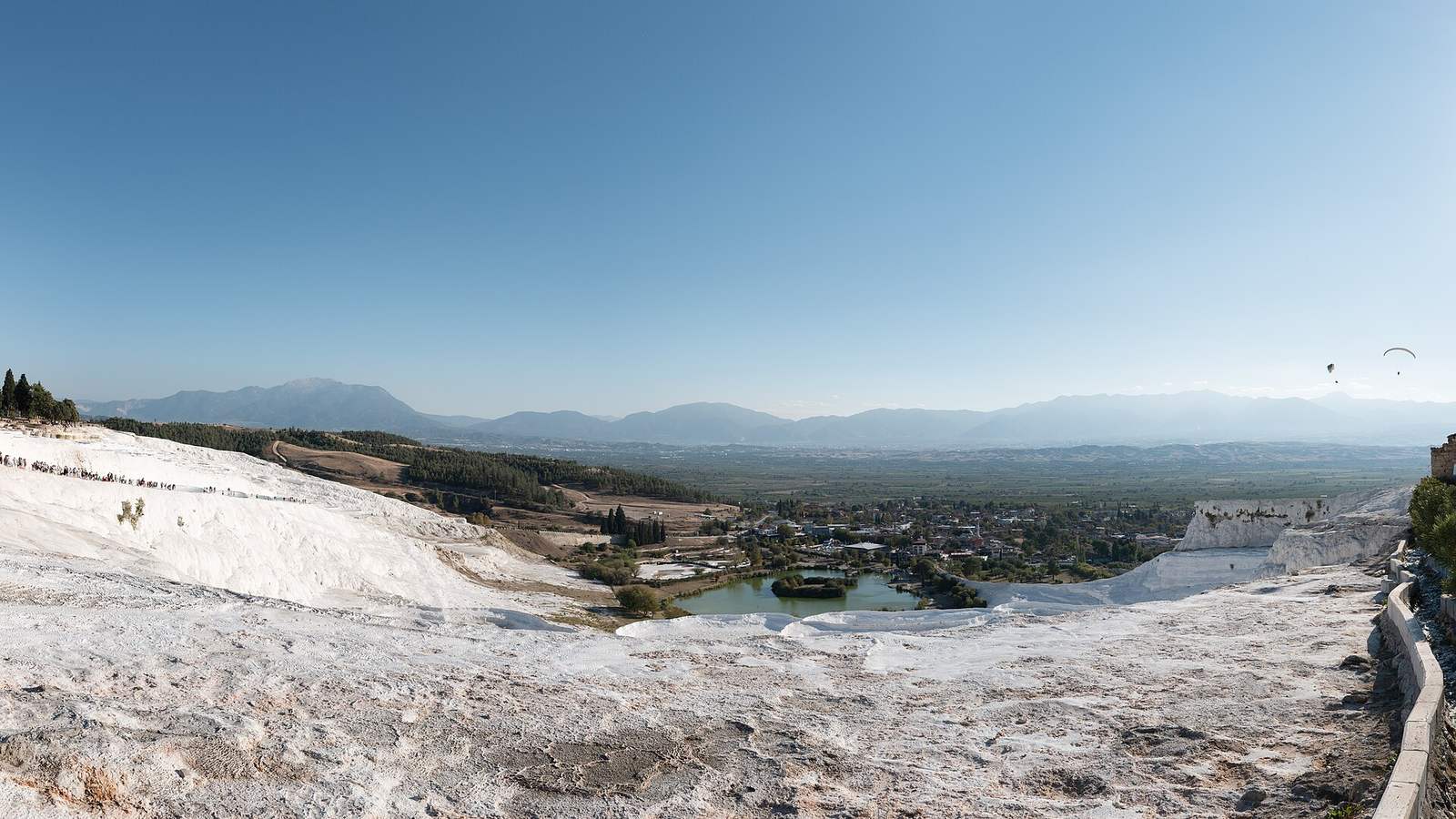
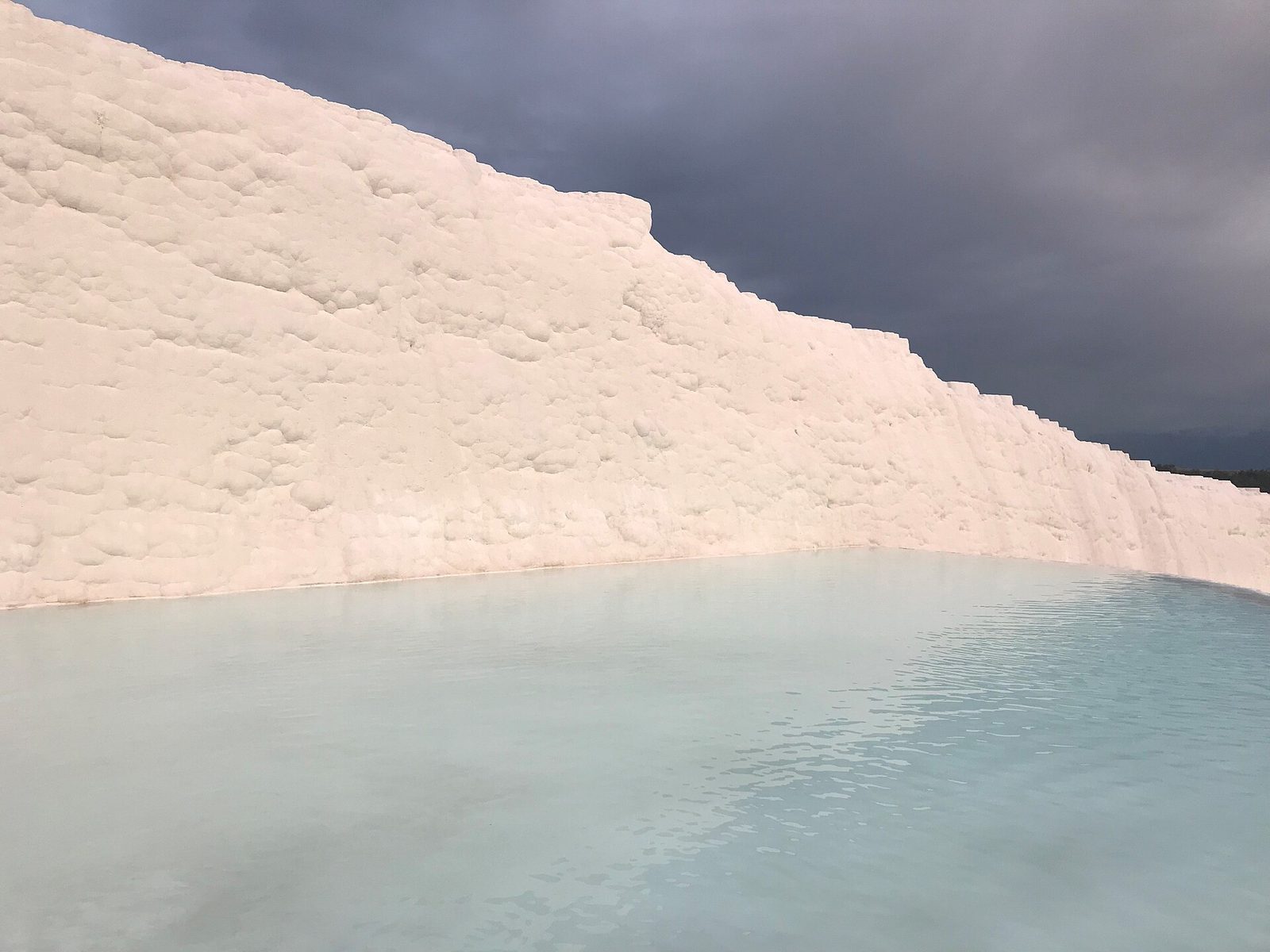
The wide view of the terraces from below is the image most people associate with Pamukkale — stepped, curved pools of white travertine catching the light in layers down the hillside. This shot works well any time of day but is at its most dramatic in the early morning or late afternoon.
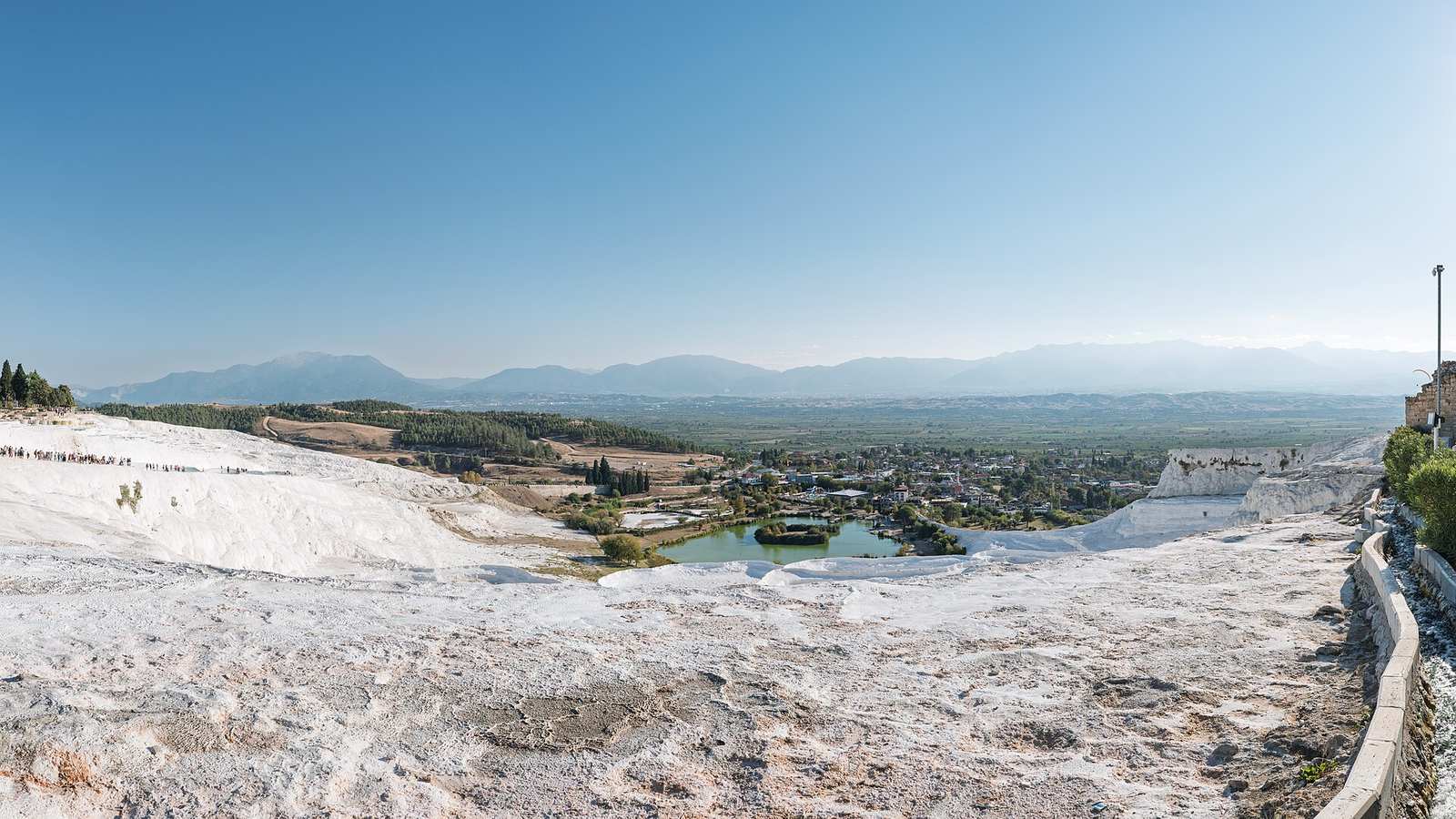
Sunset is when Pamukkale's terraces earn their "cotton castle" nickname most convincingly — low, warm light turns the white mineral surface into shades of gold and amber, with the Denizli plain stretching out below. This is consistently the most popular time for photography at the site; see our best time to visit guide for exact seasonal sunset timing.
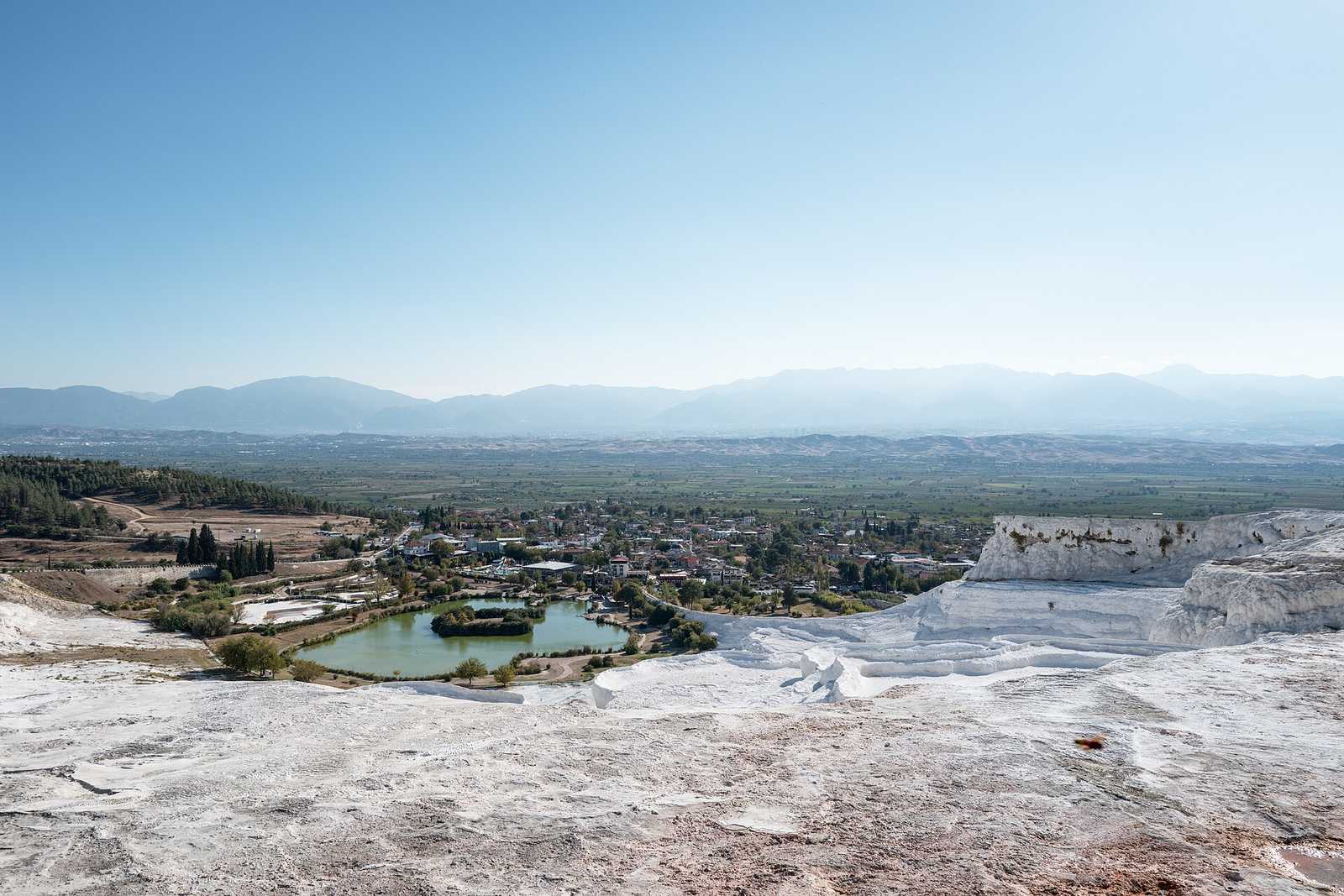
Close-up shots of visitors walking barefoot through the shallow terrace pools capture the texture of the travertine itself — the rippled mineral surface and pooled water are hard to appreciate from a distance. Get low to the ground for the most striking version of this shot, and mind your own footing while doing it. See our travertines guide for the full story of how these formations came to be.
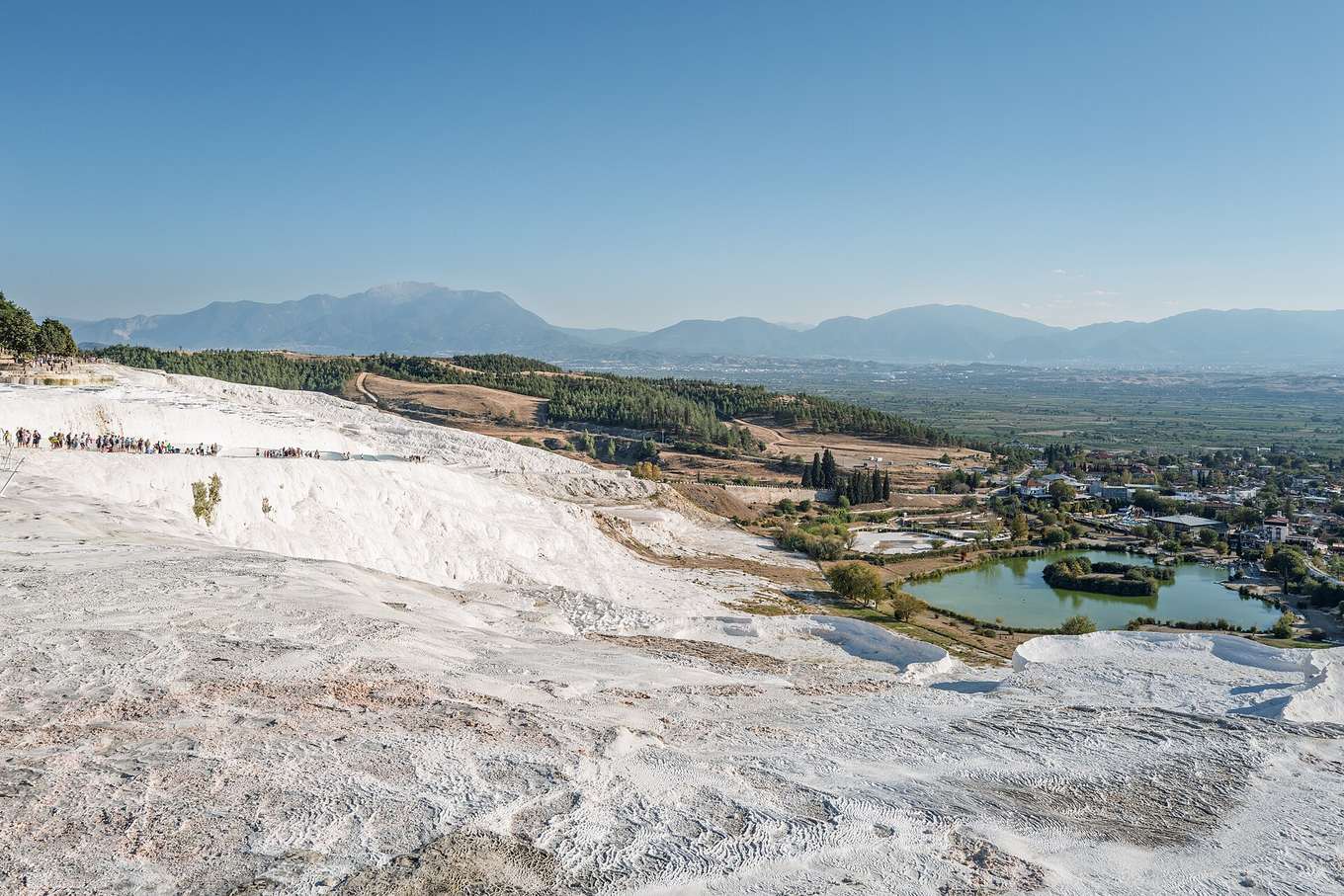
The Antique Pool (Cleopatra's Pool) offers a completely different kind of photo: turquoise thermal water, palm trees, and ancient fluted marble columns visible just beneath the surface. Underwater or waterline shots of the submerged columns are a signature image from this part of the site — read more in our Antique Pool guide.
Hierapolis's Roman theatre, with its tiered stone seating largely intact, is one of the best-preserved structures at the site and a strong photographic subject in its own right, particularly from the upper rows looking down toward the stage. Our Hierapolis guide covers the theatre and the rest of the ancient city's ruins in detail.
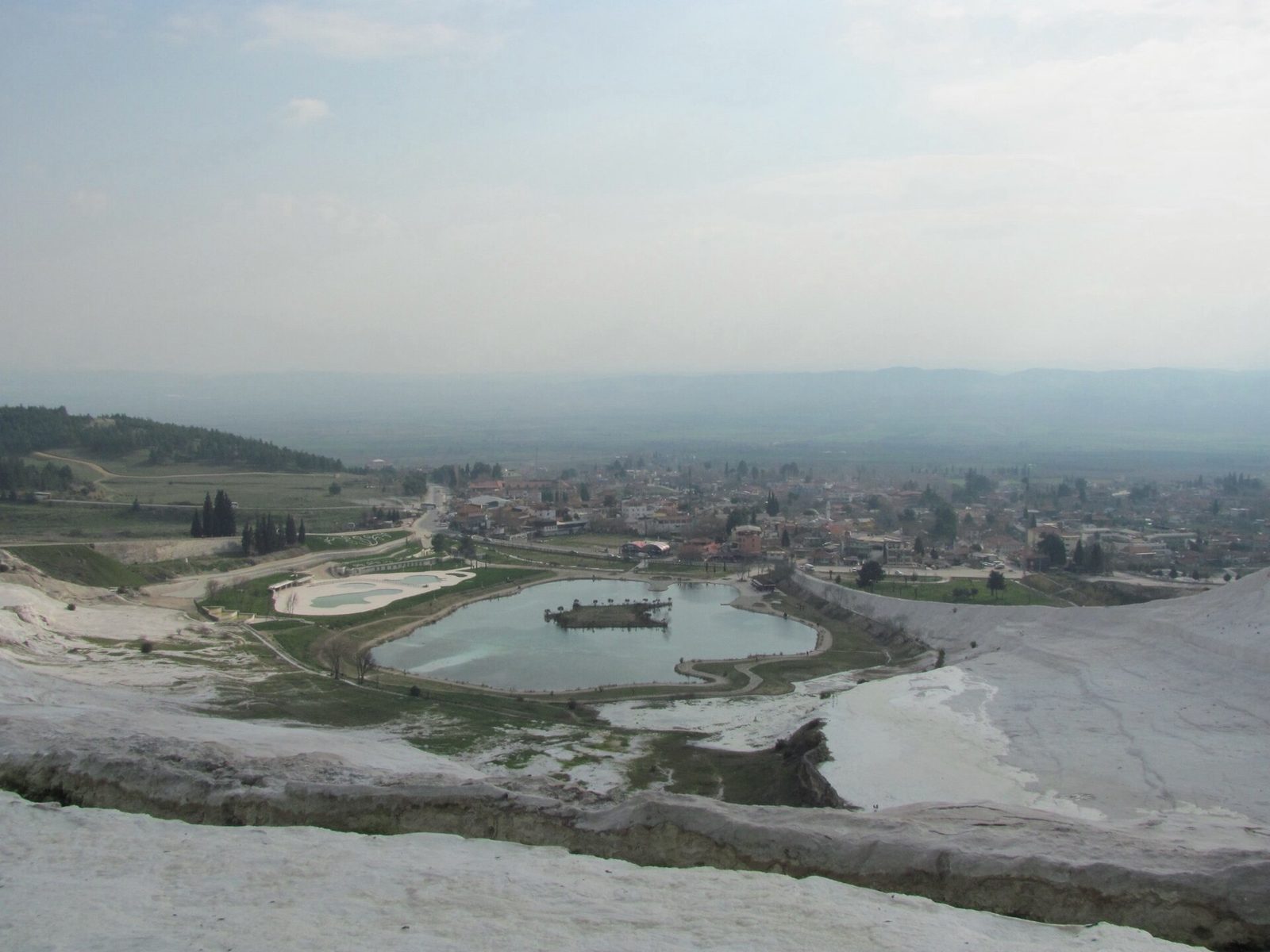
A wider view showing the travertine terraces and the Hierapolis ruins together illustrates why the two are inscribed as a single UNESCO World Heritage Site — a natural formation and an ancient city built specifically to make use of it, side by side on the same hillside.
Beyond the Six Signature Shots
While the images above cover Pamukkale's most iconic views, the site offers plenty of other photographic opportunities for visitors willing to look beyond the obvious frames. The necropolis at Hierapolis, with its scattered sarcophagi and tombs stretching along the old road, photographs well in the soft light of early morning, when long shadows pick out the texture of centuries-old stonework. The Plutonium, though fenced and not enterable, makes for an atmospheric detail shot given its unusual history as an ancient "gate to the underworld." And at ground level, close-up shots of the mineral crystal formations on dry sections of travertine reveal a texture and pattern invisible from the classic wide shots.
Photographing the Antique Pool Underwater
For travelers comfortable bringing a waterproof camera or phone case into the Antique Pool, underwater shots of the submerged marble columns are a genuinely unique image that's hard to capture anywhere else in Turkey. Natural light filtering down through the mineral-tinted water gives these shots a distinctive greenish-turquoise cast, and the visible fluting on the column fragments makes for striking detail work. Late morning, when the sun is higher but not yet directly overhead, tends to give the most even underwater lighting.
Tips for Photographing Pamukkale Yourself
- Shoot at the edges of the day. Morning and the hour before sunset give softer, more flattering light than the midday sun.
- Protect your gear near the water. The mineral water and wet travertine surface can be hard on camera equipment; a simple dry bag or towel helps.
- Mind foot traffic in your frame. The terraces get busy, especially midday in high season, so patience (or an earlier visit) helps for uncluttered shots.
- Check drone rules before flying. Drone use is restricted in much of Turkey and typically requires advance permission at archaeological sites — verify current rules locally rather than assuming it's allowed.
- Bring a wide lens for the terraces, a longer lens for the theatre and necropolis details.
Plan Your Visit Around the Light
If great photos are a priority, plan your trip around the golden-hour windows discussed in our best time to visit guide, and consider an overnight stay nearby so you can catch both sunrise and sunset without rushing. See the overview for how to structure a full visit across the terraces, the Antique Pool, and Hierapolis.